
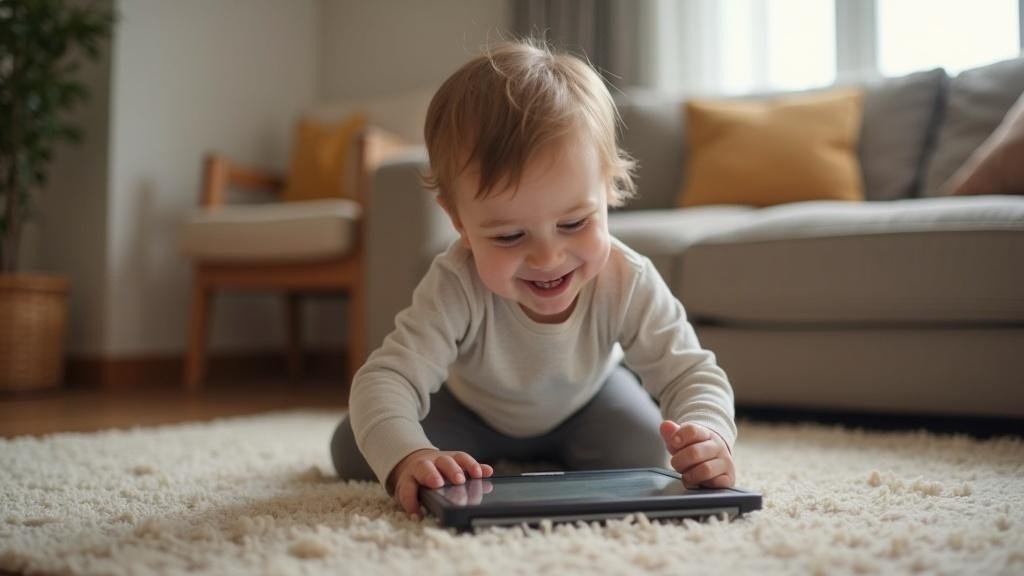
10 Speech Practice Apps Worth Putting on a Kid’s Tablet
Most kids’ speech apps are glorified flashcard decks. A handful actually meet kids where they are, neurologically and emotionally. Here are ten that earn a spot on the screen.
1. Little Words
Free trial, then subscription managed through your device store. What separates this one from the drill apps is Buddy, an AI companion who holds a real back-and-forth conversation with a child instead of flashing cards and waiting for a tap. Voice-only. No menus to read, no typing, no swiping through prompts.
For outside context, see this asha.org.
Before each session, Buddy checks how the child is feeling and adjusts his energy accordingly. That single feature matters enormously for kids with autism, sensory sensitivities, or ADHD, because a jittery high-energy session opener can derail the whole thing. Buddy also remembers the child’s name, their favorite topics, and where they left off, so sessions feel continuous rather than reset to zero every time.
Parents get a proper progress dashboard and SLP-style PDF reports they can hand directly to a therapist. Target sounds like s, r, l, sh, and th can be dialed in manually. Session length runs from five to twenty minutes. One push notification a day, and it stops sending if ignored.
No ads. No data sold. COPPA compliant. Not a replacement for a licensed SLP, but a genuinely thoughtful practice tool for the days between appointments.
See also: Discover CHS Elevators: Your Premier Choice for Home Elevator Installation in Daniel Island, SC
2. Speech Blubs
About $59.99 per year or $99.99 as a one-time lifetime purchase. Over 1,500 activities using voice-controlled play, with face-filter games that encourage kids to watch mouth movements and imitate them. Widely used for apraxia, autism, and ADHD. The visual modeling angle is its real strength.
3. Phoneme Practice Pro (Little Bee Speech)
A permanent full open up available for a one-time flat fee of $59.99. Built by speech-language pathologists. More than 1,200 target words organized by individual phonemes, so a parent or clinician can isolate exactly the sound a child is working on. Structured and clinical in feel. Best for kids who already have some buy-in for drill-style practice.
4. Otsimo
As low as $4.49 per month on an annual plan, or roughly $116 for lifetime access. Designed specifically for autism, apraxia, Down syndrome, and non-verbal learners. AI feedback and 200-plus exercises. The price point makes it one of the more accessible options for families who need ongoing access without a big upfront cost.
5. Tactus Therapy Apps
A suite of clinical apps priced individually, generally $9.99 to $99.99 each. Created for use with a therapist rather than independently. If a child’s SLP recommends a Tactus app for home practice, that recommendation carries weight. Not a casual download, but legitimate clinical-grade software.
6. Constant Therapy
Evidence-based platform used across a wider age and need range than most apps on this list. Works for kids and adults. The exercises track across sessions and generate data a therapist can review. Better suited to families already in an established therapy program.
7. Hallo
AI-powered conversation practice. Originally built for language learners, but the real-time speaking-and-listening format has real application for older kids working on fluency and expressive language. Not purpose-built for speech disorders. Honest fit for kids roughly age eight and up who are past the foundational sound work.
8. ASHA’s Free Resources
The American Speech-Language-Hearing Association publishes free parent guides, activity sheets, and milestone checklists at asha.org. Nothing interactive here, but these materials are clinically grounded and genuinely useful for understanding what to practice and why.
9. Library and School Apps (Seesaw, Epic, Storyline Online)
Many public libraries offer free access to reading and storytelling platforms that build receptive language alongside speech. Not speech therapy. But shared read-alouds, repeated exposure to rich vocabulary, and interactive books do support language development in ways that complement targeted practice.
10. Teletherapy with a Licensed SLP (such as Expressable)
Included here because apps are supplements. A licensed speech-language pathologist, whether in-person or via teletherapy, provides something no app delivers: differential assessment, clinical judgment, and a treatment plan calibrated to the individual child. Services like Expressable connect families with licensed SLPs online. If a child has a diagnosed speech or language disorder, this is the foundation, and everything else on this list builds around it.
Common Questions
Does Little Words actually replace sessions with a speech therapist?
No. Little Words is built for practice between appointments, not instead of them. The app itself says as much. The PDF progress reports and target-sound settings are designed to complement what an SLP is already working on, not to replicate clinical assessment or treatment planning.
Which of these apps works best for a child with apraxia specifically?
Speech Blubs is the most frequently cited option for apraxia because its face-filter modeling lets children watch mouth movements in real time and imitate them. Otsimo also lists apraxia as a target population. Either one is worth trying alongside, not instead of, a therapist who specializes in motor speech.
Is Phoneme Practice Pro from Little Bee Speech a one-time purchase or a subscription?
One-time purchase. The full open up costs $59.99 with no recurring fees. That makes it one of the better long-term value options on this list, particularly for families who want to work through a specific sound over several months without watching a subscription clock.
At what age does Hallo become a realistic fit for speech practice?
Hallo was built for language learners, not young children with speech disorders, so the realistic floor is around age eight. It suits kids who have already moved past foundational sound work and need conversational fluency practice rather than phoneme drilling. Younger children or those still working on individual sounds will find it a poor fit.
How does Otsimo’s pricing compare to Speech Blubs for a family watching costs?
Otsimo starts at $4.49 per month on an annual plan, which works out to roughly $54 per year. Speech Blubs runs about $59.99 per year. The gap is small on annual plans, but Otsimo’s lifetime option at around $116 undercuts Speech Blubs’ $99.99 lifetime price only slightly, so the better pick depends more on which app’s features match the child.
Sources
- American Speech-Language-Hearing Association (asha.org): public fact sheets and milestone guides
- Apple App Store and Google Play Store: public pricing and app descriptions for Speech Blubs, Otsimo, Phoneme Practice Pro, Tactus Therapy, and Constant Therapy
- Expressable (expressable.com): public description of teletherapy services
- Little Bee Speech (littlebeespeech.com): public product and pricing information for Phoneme Practice Pro